
Beginning in 19th Century France, then known as Opal Glass, Milk Glass’ popularity caught on in the United States during the turn of the century and Victorian Age, then again in the 1950’s. Milk Glass gets its opaque quality when other compounds are added to the glass making process. It was an affordable alternative to the porcelain being used in wealthier homes at the time. Today, the availability and affordability of the smaller more common pieces make milk glass a good starting point for many collectors. Rare and larger pieces can command high prices (into the $1000’s), but many authentic pieces as well as reproductions can be obtained online or at estate sales for less than $20.
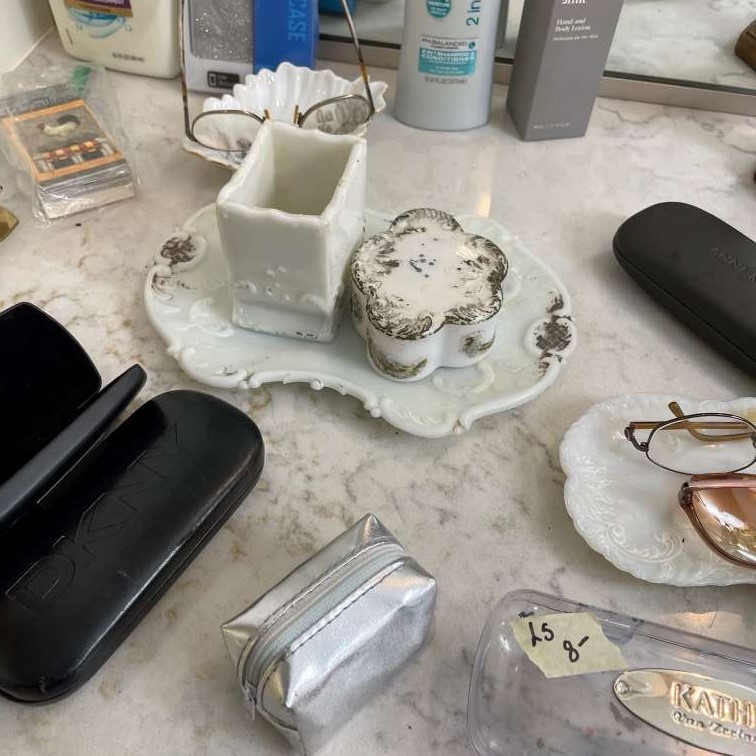

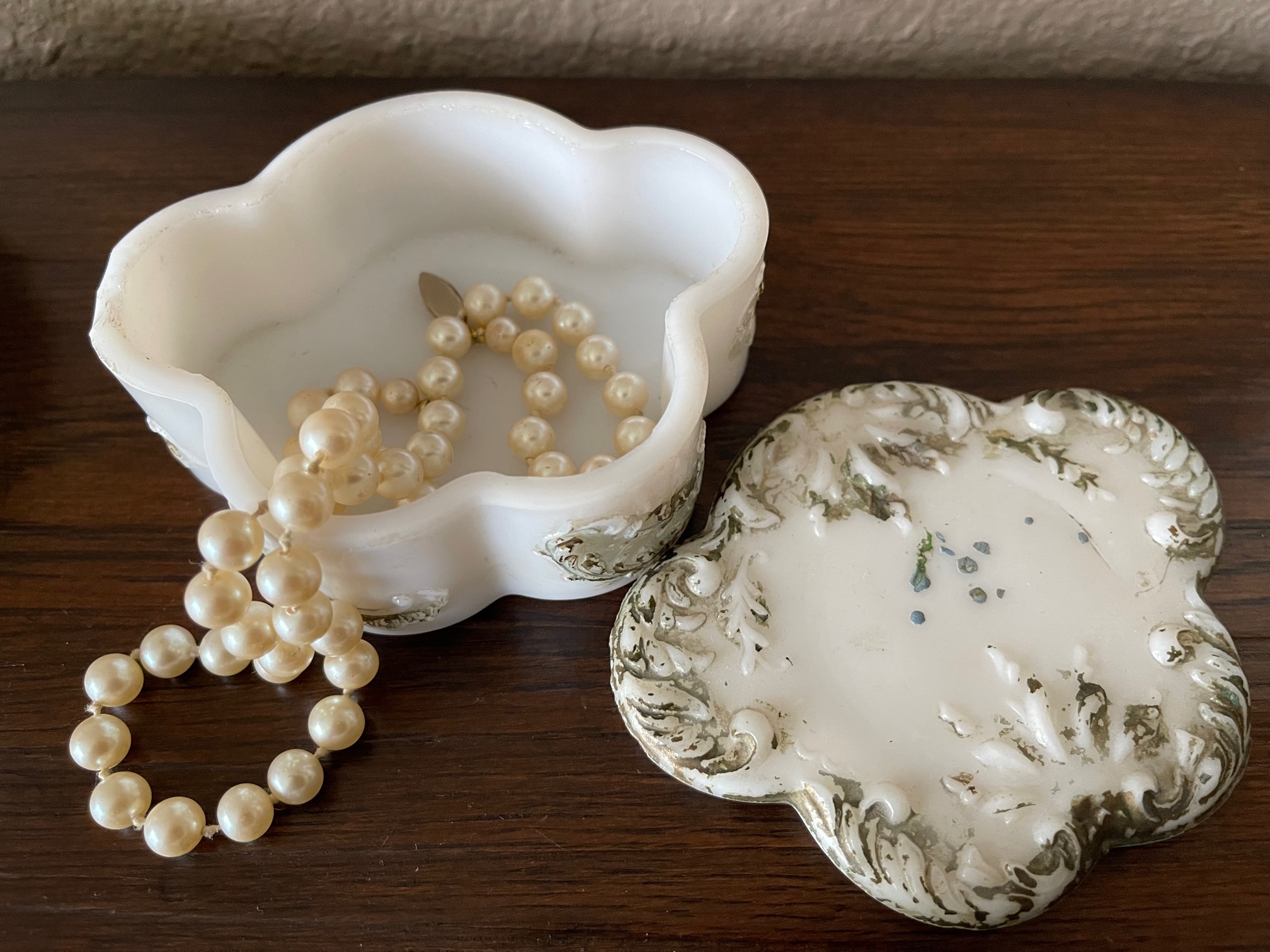
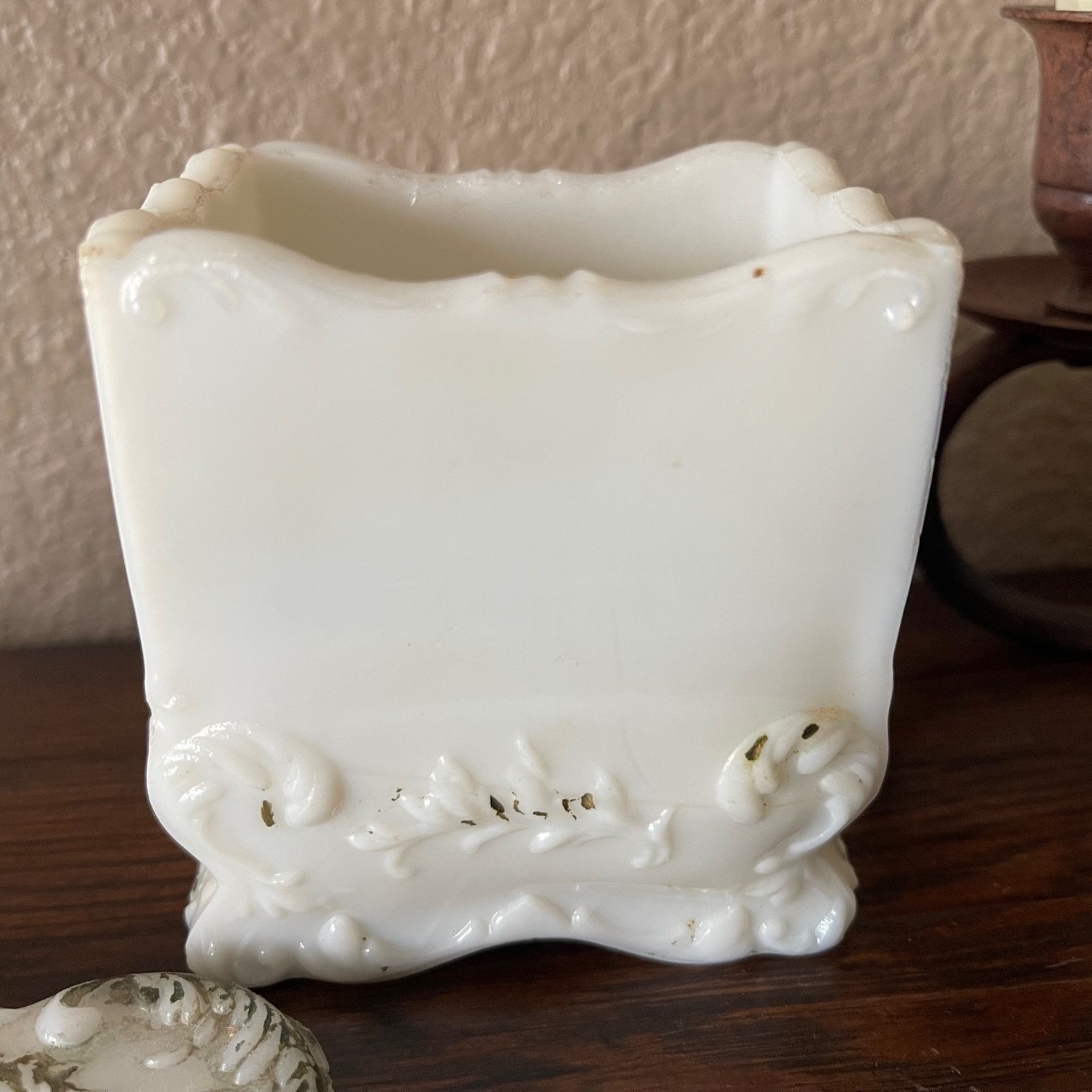
I discovered this little dresser set at an estate sale. At first glance, I thought they were dirty and would require cleaning. After some research, I realized that what I thought was dirt was actually gilded/golden paint that had turned in color over time. Older Victorian milk glass was often painted with gold paint, animals or florals. I purchased three of the four pieces there. These three seemed to match each other. An open box ($8), a tray ($10) and a trinket box/pin box w/a lid ($4) all minus a 25% discount. I think that’s pretty good! Their intended functions are unknown but they could have had various uses and were likely set on a dresser or in a dressing area. Many women kept jewelry/hat pins in these types of dishes. The gentlemen may have stored their cufflinks or tie pins in the same. The tray could have held glasses or a pipe, and the box, pins, cigarettes, cotton, who knows?! I had previously purchased a small boudoir lamp (which had the original shade missing) at another estate sale. Prices for similar items to what I have here come in under $100, some as low as $15.
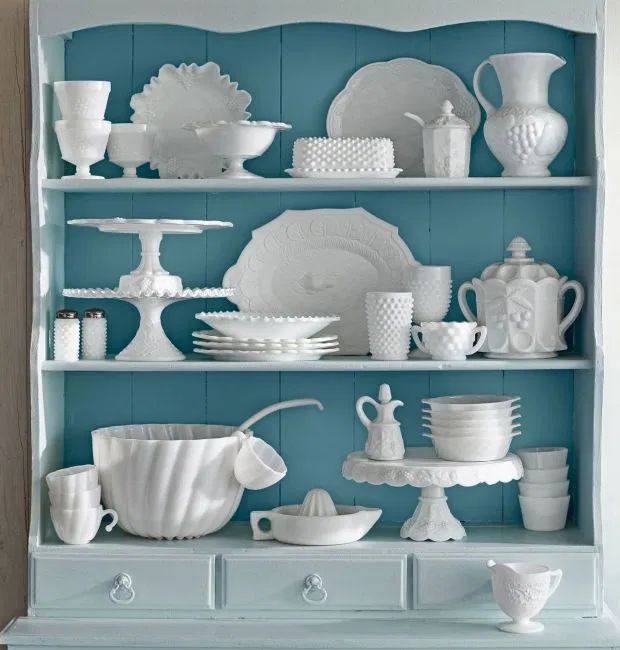
After some research, I learned that authentic milk glass gives off different colors when held up in bright light, likely due to the different compounds that were added to the glass. This effect is known as “the ring of fire” and is a tell-tale sign of its authenticity. There are many sought after brands such as Fenton, Northwood, Westmoreland and the older Atterbury; however, many early pieces were not stamped by the maker, except for numbers. So, it can be difficult to know what you have. Milk glass can be displayed in many ways and can provide a striking visual contrast when displayed against a darker background (as shown above, photo from Pinterest.) It also gives a clean, feminine touch to any area. This versatile item seems to be something to collect simply because you like it and not necessarily because of what it might be worth. Do you have any milk glass?
 Antiques at Home
Leave a comment